

I Built a Fun App with Claude Code + Figma Make. Here Are My Thoughts So Far
It's Fun and Powerful, But it's Not Magic

I’m really excited about what I’ve made so far. Claude and Figma Make did a ton of the heavy lifting, making it relatively easy to make a fun project that I’d never find the free time to make. And yes, I can definitely see how tools like these will mean much fewer engineering jobs, but more than that, I think they will shape the skills needed to be a good engineer in the world of ai. I think generalists are going to be strong in this realm, but I also think specialists are going to be more important than ever.

I built a small app/mobile site, sendaboop.app, to test out Claude Code and Figma Make. The app sends a cute animal photo to a friend. I don’t collect any data, it’s totally free. I’m not even going to add emails to a newsletter or hoard them in my piratical ‘I got yer email!’ treasure chest.
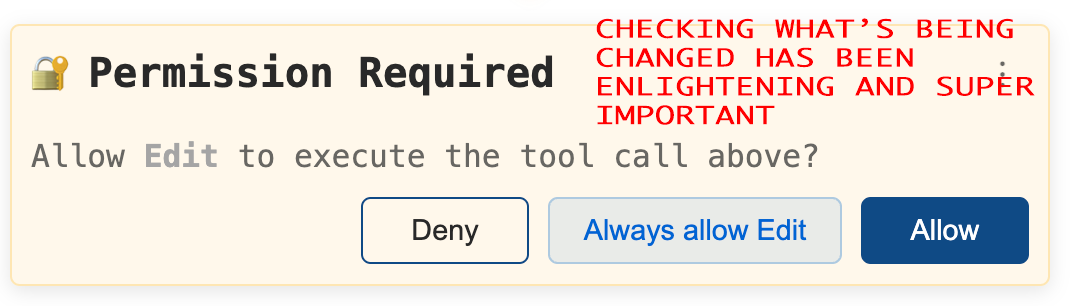
I didn’t over-engineer my prompts; I just dove right in. I would write out a short to-do list with some parameters, and then let Claude Code do its thing. I kept permissions to ‘allow’ for every change because I wanted to watch its ‘brain’ work. I tested and prodded and poked in between sessions. I spent a lot of time refactoring, correcting weird decisions, and dialing in the user experience. That process taught me a lot about where these tools are strong and where they still need our help.
More on the Build
The codebase is built with React Native + Expo, with the goal of being both web-accessible and app-store-ready. In theory, this gives me a clean path to shipping on iOS and Android later. I used the Resend API for the email part. It’s hosted on Vercel and Railway.
After watching a video from Matt Maher “AI Gave You Coding. Now It Gives You Design,” I tried ChatGPT to see if it could create a decent app design. Holy cow, that experiment verified that there’s a reason we still need people who study UX/UI and design. Sorry ChatGPT, but in the area of design and ui, you still need to work on taste, hierarchy, accessibility, and usability.
I created a decent start of a design in Figma Make and wound up using much of it in the current version of the app. Figma Make is fun… I’m still getting to know it. Right now, it feels a bit awkward. I’m so used to Figma Design, but by being a Figma product, it’s unsurprisingly waaaaay better at creating designs.
The “AI Can Build Anything” Myth
Lately, I’ve been served a billion with ads claiming that non-coders can now build any app they want with AI. I don’t buy it; not yet anyway.
Claude code feels like a recipe book:
They’re decent at following known ‘recipes.’
They’re not great at adapting those ‘recipes’ to new ideas.
They don’t test their ‘recipes’ very well.
They’re pretty terrible at guiding the user through issues.
They’re not great at imagining edge cases or thinking outside the box.
If you remember the WYSIWYG hype in the late ’90s. The promise was that anyone could build beautiful websites without knowing how to code. And yes, it’s gotten easy to make generic, good-looking websites that some non-coders can figure out how to edit, but if you need a design that aligns to your branding, or g-forbid adding anything like tracking codes or integrations with lead-generating tools or other utilities, even the best WYSIWYG editors need coding expertise. WYSIWYG still isn’t 100%. Generic is cheap and fast. Custom, high-quality work still requires skill. I think the same truth will remain for AI coding tools.
Happy Path Only (a.k.a. Error Handling Is an Afterthought)
One thing AI tools are consistently bad at: error handling.
In my UX/UI class, we recently reviewed a random local business website (a dog grooming service) that was clearly AI-generated. It was… rough. The forms technically had validation logic, but the submit button was disabled until the form was valid, so users almost never saw the errors. When errors did appear, they were vague or confusing.
This is a recurring pattern:
AI builds for the happy path
It doesn’t anticipate how things break
Error states are poorly designed
Messaging is unclear or misleading
These are exactly the details that separate “works technically” from “feels good to use.”
What AI Tools Are Not Great At
From working with Claude Code and Figma Make, here’s what I consistently ran into:
Happy-path-only thinking
Weak or nonsensical error handling
Non-DRY, repetitive code
Poor organization and architecture
Weak server-side problem-solving
Little awareness of deployment realities
In other words: these tools behave a lot like junior developers who haven’t shipped many real products. They can produce code, but they don’t reason deeply about failure modes, long-term maintenance, or system design.
Why Experience Still Matters
I’ve seen:
Marketing Campaigns that claim AI can now generate great UI (it can’t, consistently)
YouTube Influencers claim non-coders can ship complex apps (not realistically)
People suggest design can “solved” by prompts (it’s not)
Good UX/UI requires:
Understanding user behavior
Accessibility knowledge
Information architecture
Visual hierarchy
Clear error messaging
Real usability testing
Intentional accessibility design
Likewise, building real products requires:
Database and server architecture knowledge
Deployment and infrastructure experience
Debugging skills
Product and market awareness
Business and marketing strategy
You can build something without these skills. You can’t build something good.
The later parts of design and development that make for great products, apps, and websites that feel intentional, usable, and delightful to use is the hardest part. AI can help you get close. It can’t finish the job for you.
The Awesomeness with Claude Code and Other Tools
I’ve been a design instructor and web developer for years. A big part of teaching is encouraging students to build fun, experimental projects, but I rarely find enough time to build my own fun projects. That’s dramatically changed. I can come up with an idea, and within a day or three, I can create a solid MPV.
This has also been a great reminder, in the current brutal job market, that I actually know a ton about development and design (who knew?). Without that background, my AI-generated apps would be… not great. Ironically, robots writing 70% of my code are helping me build back the confidence that a bazillion Dear John letters have chipped away at over time.
TLDR;
Will AI dev tools ever reach a point where someone with no core skills can truly build fully functional, well-designed products? Maybe someday. I can’t imagine it happening soon.
AI coding and design tools can get you surprisingly far, maybe 60-70% of the way. But they still need human judgment, domain knowledge, and problem-solving to turn something into a good product.
Final Thoughts
I’m Gen X, so sure, I’m cynical—but I’m cynical because I’ve seen this pattern before. “Magic” tools promise to remove complexity. But ‘custom’ is always complex. And AI coding tools can’t yet create quality, reliable, accessible, or scalable projects on their own. AI tools are powerful. They’re also not a replacement for experience yet.
If you believe in magic, you’re in for a surprise when things break or aren’t fun to use.
If you’re a realist, you do research, make plans, and build with intention.
A last note: I used ChatGPT to help me craft a better article and I just don’t understand the obsession with m-dashes. Stop it ChatGPT!